
On the surface, one might think that there’s not too much in common between competing in a triathlon and yoga. From my perspective, there actually is.
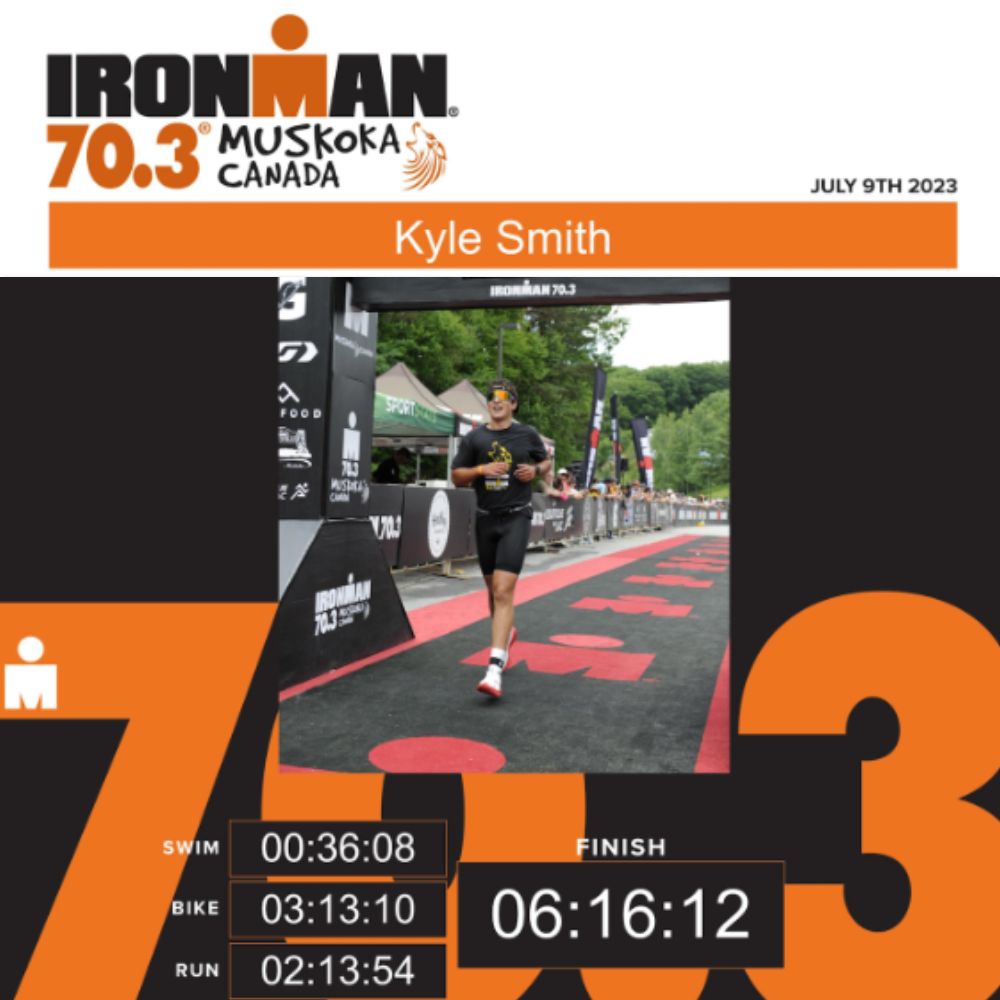
Recently my son participated in a triathlon, his second but first half Ironman 70.3. There were 1288 participants that swam 1.9 kilometers, cycled for 90 kilometers and ran for 20 kilometers. The people that participated in this event were all ages, at various stages of their lives and fitness levels. To me, they appeared to be seekers on their own, individual journey connected by this discipline.
As an outsider, one might wonder why on earth someone would put themselves through something like this. I mean, it’s certainly not my cup of chai but then again, what I do as a dedicated practitioner of yoga may also seem quite strange and unappealing to others.
I really enjoyed watching the athletes and learning more about this new (to me) sport. The fact that athletes need to hone their skills in all three disciplines is very interesting and, I believe, makes for a well rounded practitioner.
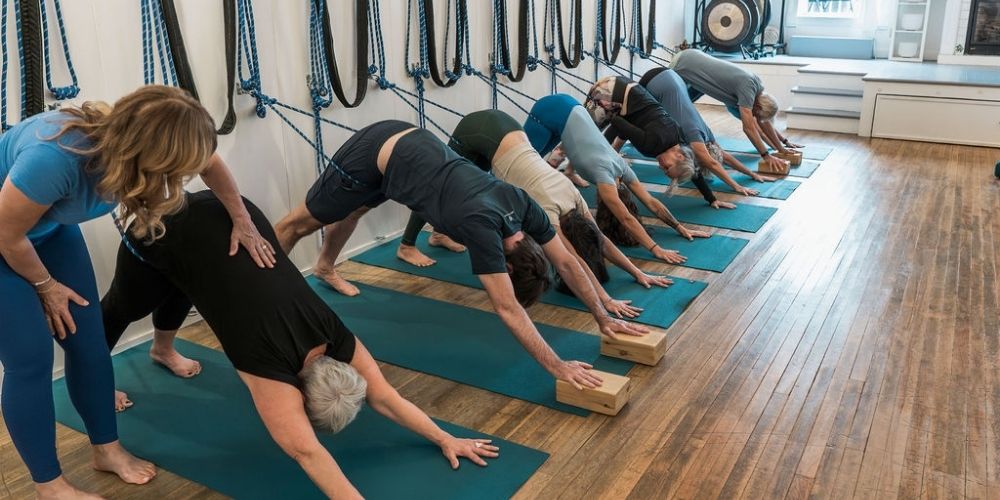
Just like an athlete might be good at cycling and not a strong swimmer, a yogi may be adept in forward bends but struggle with inversions. It doesn’t mean that you stop practicing the parts of the practice that aren’t as accessible to you, it might actually mean that you practice them more. Just like a yogi, a triathlete has to hone their skills in all of the required disciplines.
In yoga, we talk about the three pillars of practice that are necessary for you to be a well rounded practitioner:
Jnana yoga – the yoga of knowledge
Bhakti yoga – the yoga of devotion
Karma yoga – the yoga of action
Upon reflection, there’s a fascinating synergy between this and the discipline required to be a triathlete. Effectively, they would need to hone their skills in knowledge, devotion and action towards their sport as well.
In yoga practice, some days flow well and the practice feels easeful. On other days, it’s difficult and heavy. Similarly, I am sure there are days when a triathlete would have a good run/cycle/swim, and other days when it feels like nothing is working in their favour. But they keep coming back; they keep trying to move forward. Eventually it becomes a practice of mind over matter.
In yoga and triathlons and life in general, practice and preparedness is cumulative. You can’t just show up on event day, you need to show up every day. When you do this, It’s like having money in the bank. Through continuous practice you make deposits that can be drawn out when you need them.
A triathlon, like yoga, is an individual pursuit, practiced in community. Community creates the container, the space, the opportunity for an individual to challenge themselves with what they have practiced and prepared for.
Unless the athletes are professional or elite performers, they aren’t really competing with each other. It’s more like they’re competing with themselves or at least that part of themselves that has any doubt about crossing the finish line.
In the case of my son, he was not athletic. He never participated in track meets or the like. He loves hockey but joined late and worked hard learning how to hit the puck because skating fast did not come naturally to him. As much as I pleaded, he refused to take group swimming lessons past grade six. What made my son successful was the fact that he worked at it. He prepared for the triathlon through cumulative practice over a long period of time.
These competitions display so much of the strength that lies below the surface. They display our spirit, potential, willpower, resilience, passion, discipline and determination. These athletes possess a willingness to face failure and an openness to learn from the lessons failure lays out for us.
Similar to yoga, just as an athlete crosses the finish line, rather than that moment representing an ending, it becomes a beginning. A new leg of the journey. The lines get blurred and the finish line becomes the starting line.
Everytime you swim, bike, run or step on to the mat is a new, free, unscripted opportunity to increase your confidence. Eventually you will come to understand that anything can arise but because you have honed your skill through practice, you have access to the tools that will help you navigate through those situations.
“The pace wins the race.” True to triathlons and to yoga. Find your pace, on any given day and on any given moment. Your pace is unique and specific to you. It is different than everyone else’s and it’s what is going to get you across the finish line.
In triathlons the transitions between disciplines are very important. Transitions occur when you switch from swimming to cycling, cycling to running. Transitions need to be calculated, organized, smooth, well planned and well executed. The rhythm of the transition is more important than the speed of the transition. The quality of the transition matters physically and, perhaps, more importantly, mentally. There’s a beautiful parallel here to the practice of yoga and the transitions that occur between poses; coming into and moving out of an asana.
Watching all of this unfold reminded me of BKS Iyengar’s description of yoga as “Meditation in action.” Where we encounter that unique ability to pause the constant background chatter of the mind and experience a state of absorption in the present moment.